

Resource Center › Compliance
Global Transparency Reporting: Simplified
International reporting obligations vary by country. See how MedPro Systems tracks them and helps you report accurately everywhere you operate.
Country by country
Local laws, industry codes and enforcement guidelines
Often expanded, including patient organizations
Vary by country and activity
Global Reporting Requirements Vary by Country
Transparency reporting has become a critical and increasingly complex requirement for Life Sciences companies operating across the globe. Unlike U.S. transparency regulations, international reporting obligations vary significantly by country and are shaped by a patchwork of local laws, industry codes and enforcement guidelines.
Depending on the jurisdiction, companies may be required to report certain interactions and/or transfers of value, often to an expanded set of recipients, such as patient organizations, on timelines that vary in frequency and can be triggered by activity beyond sales, such as clinical studies conducted in a country.
This complexity can quickly overwhelm internal teams, which is why MedPro provides the trusted data and compliance solutions needed to ensure accurate, timely reporting everywhere you operate.
MedPro’s Approach to Regulatory Research
Our experts continuously track global transparency regulations, industry codes, emerging laws and best practices. This research is consolidated into RegulatoryID, MedPro’s comprehensive centralized library of international transparency reporting requirements.
With RegulatoryID, you’ll find the guidance you need in one authoritative source, removing the burden of manual research and reducing the risk of missed or outdated requirements.
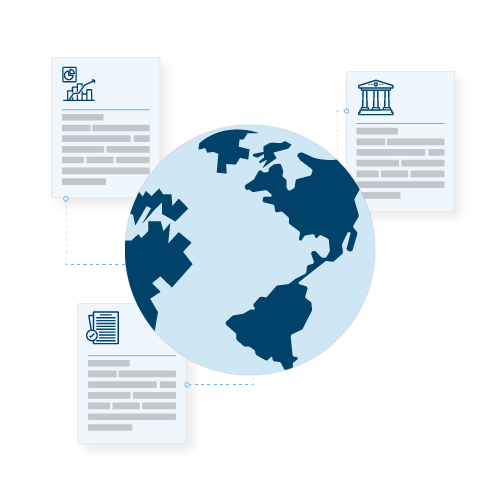
Holistic U.S. federal and international reporting guidance

Proactive updates on evolving regulations and approaching deadlines
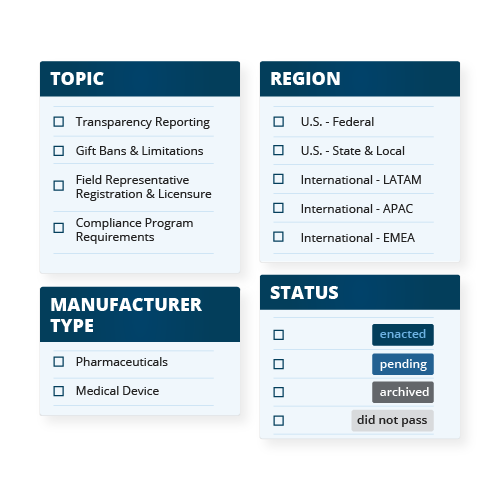
Quickly search or filter regulations by topic, region, status and more
All authoritative sources and related reporting platforms linked for quick access
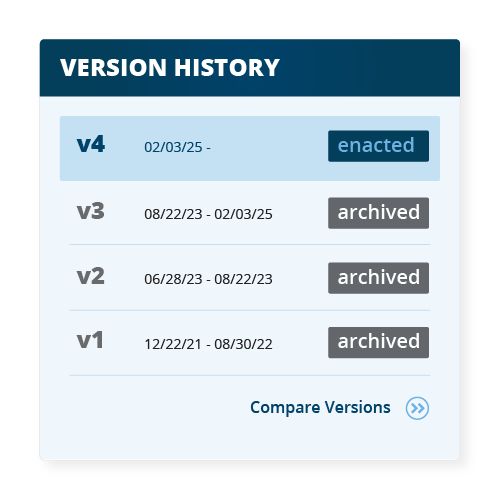
Track and compare a regulation’s version history to highlight impactful changes

Direct download and email of resources for distribution to key stakeholders
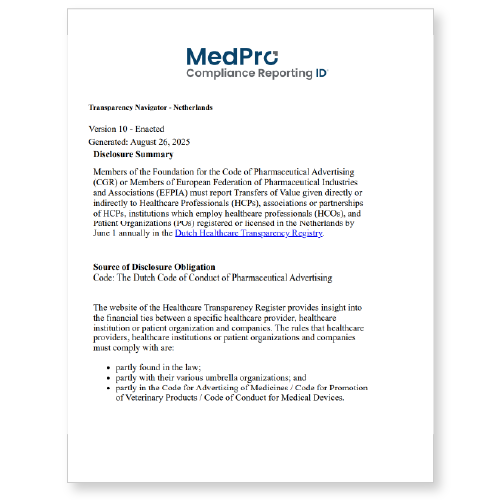
What Each Navigator Covers
How MedPro Systems Can Help
MedPro brings clarity to complex global requirements. Through MedPro Compliance Reporting ID®, our centralized single sign-on platform, you gain one place to manage global transparency obligations, backed by a team of regulatory experts.
FAQ
Frequently Asked Questions
Global Transparency Guide
Navigating Global Transparency Compliance
Download MedPro’s comprehensive guide to global transparency compliance. Learn how leading Life Sciences organizations achieve end-to-end coverage across U.S. and international disclosure obligations in a single platform.
Related resources
-
Provider Verification Beyond Compounding Pharmacy Onboarding
How current provider and facility information supports documented decisions from account setup through order fulfillment.
-
Where Prescriber Verification Fits in the Specialty Pharmacy Workflow
A practical look at verification checkpoints from prescription intake through dispensing and the value of current provider data at each stage.
-
7 Workflow Gaps That Slow Down Life Sciences Compliance Teams
As compliance responsibilities grow, small gaps between data, systems and teams can create extra manual work. Here are 7 places to look first and practical steps your team can take to strengthen the workflow.
-
Two International Disclosure Dates to Plan For
Colombia’s biannual value-transfer filing is due September 30, and Japan’s annual disclosure window follows each company’s fiscal year end.